
From partners

From OpenFederation
Who holds the keys? Custodial, assisted and self
Every account on a network like ours comes down to a key, and somebody has to keep it. Whoever keeps it can move the account, sign as its owner, or lose it. Release 0.6.0 (12 November 2026) lets each person on an…
From OpenFederation
Pen names, and moving house
In October we wrote that a pseudonym could sign its own move to another server, but the new server couldn't open the account, so in the demo an admin loaded the backup by hand. That part is finished. Since release 0.5.0…

From Athlon.technology
The part that doesn't copy
Much of how we learn happens before words: a picture built in the dark, gut feeling, sleep. Models think in text, copy perfectly, and have just started to dream. What's left that doesn't copy, and what I'd say now about the things I called ours in 2019.
From OpenFederation
Open Newsrooms, and why pseudonyms came first
Updated 15 November 2026. Releases 0.5.0 and 0.6.0 changed several things this article said in October. The original sentences are still here, each followed by a dated update. Release numbers follow the 0.x numbering…

From Athlon.technology
Best story wins
We train AI agents with drive and no way to give up. What motivation research says about where that leads, why a half-wired prototype is the small version of the same thing, and what we lose when machines start telling our stories.

From Athlon.technology
Rules, judgement and the noise in between
Everyone talks about AI bias, far fewer about AI noise. What Kahneman's Noise teaches about rules vs judgement, where new decision models like Jev and Laya fit between code and chat, and why agents talking to agents worry me.

From Athlon.technology
Onboarding onto a codebase nobody wrote
Developers already spend around 58% of their working time reading code and working out what it does. Inheriting a vibe-coded prototype means doing that with nobody to ask, so we generate the map before anyone writes a line: every route, every endpoint, and a status column that says which features are actually real.

From Athlon.technology
Why we write our own skills
A skill is packaged instructions your agent follows on every task it touches, so installing one you haven't read means running someone else's process on your codebase. Why we write our own, what we check before installing anyone else's, and what researchers found when they indexed 98,000 public skills.

From Athlon.technology
AI writes the code. Experience writes the ticket.
Give an agent a vague ticket and you get plausible code that closes it. Give the same model a real specification and it produces code that ships. A real opening ticket from a live build, read line by line, and the verification half that most teams are quietly exposed on.

From Athlon.technology
We accidentally built our own version of Jira’s AI workflow
Atlassian rebuilt Jira's developer pitch around AI agents, and we read the page with a strange feeling of recognition. We've been running that workflow on a production build since spring, without ever planning a platform. The part their tooling can't ship is the part that makes it work.

From Athlon.technology
We gave an AI agent its own account in our project tracker
An AI coding agent sits in our assignee dropdown between two human engineers. Most of what we learned came from the preparation: the tag that gates the work, the review column it has no way around, and the four kinds of work where handing it a ticket is the wrong call.

From Athlon.technology
The demo gap
Somebody on your team built a working version over a weekend, and the board has already seen it. What stands between that demo and a system is most of the work, and it happens to be the part AI is currently worst at. What that looked like on a real engagement, plus four checks you can run on your own prototype this week.

From Athlon.technology
The convergence is in the reasoning, not in the learning
Two things are actually broken in this generation of AI, and reasoning isn't one of them. A single training run costs the lifetime energy of roughly 3,500 brains, and a five-year-old still learns a new shape from one example. What building with these systems has taught me about how we predict, remember and make things up ourselves.

From Athlon.technology
Why I was quiet on the AI topic, and what I got wrong
I posted about AI and machine learning for over ten years and got about three likes for the trouble. Then it became the biggest topic there is and I went quiet. A recommender system in 2012, a startup that didn't say AI in its pitch in 2016, a Microsoft panel in 2019 where I had it backwards, and what a decade of context is worth when everything moves this fast.

From BETMA.eu
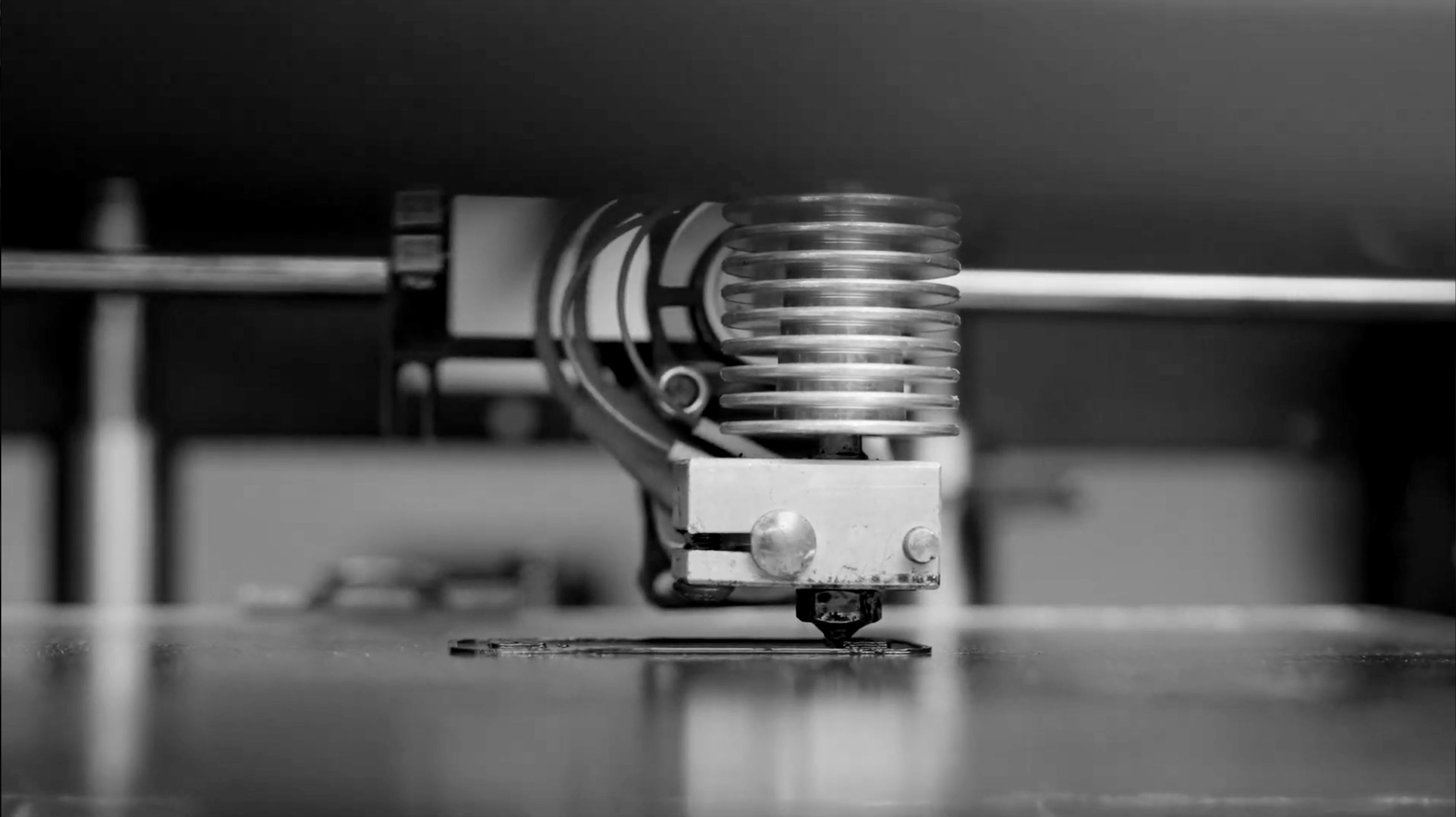
Rapid Prototyping in Modern Manufacturing
Rapid prototyping has become a key part of modern manufacturing, not just for speeding up development but for improving decision-making. By enabling teams to test ideas, validate functionality, and prepare for production in stages, it helps reduce risk and streamline the path from concept to scalable product.
From OpenFederation
What Is OpenFederation and Why We Chose ATProto
Updated 15 November 2026, after releases 0.5.0 and 0.6.0: moving between servers now works, and a person can hold their own identity keys. Earlier update on 29 October 2026 (what migration and signatures guarantee,…

From BETMA.eu
The metal 3D printing market is exploding
Here's what you need to know. 3D printing metals has come a long way, and lately it's been trending in the news. Additive Manufacturing Research (AMR) predicts a strong future for the metal additive manufacturing (AM) sector, driven by sectors like aerospace, automotive, and healthcare. The report identifies defense spending and industry consolidation as potential factors that could further boost the market. Metal 3D Printing Market Set to Grow to $5.4B in 2023, Says AM Research Report Source 3